

Working Background
Photovoltaic (PV) laminators are key equipment in the production of solar panels. They use heat and vacuum pressure to laminate layers such as solar cells, EVA film, backsheet, and glass into a single, durable module. This process requires precise temperature control, uniform pressure, and a clean, non-stick surface to ensure high yield and product quality.
The lamination process typically runs at temperatures around 200°C, with cycle times depending on panel size and line automation.
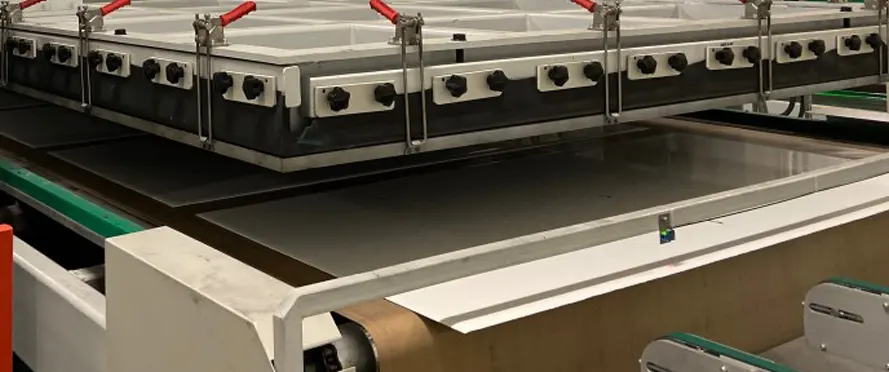
Principle of use of laminated cloth
When laminating solar PV modules in a laminating machine, the laminated cloth is placed on the top and bottom layers of the PV module as a cover cloth and a padding cloth, respectively. The anti-adhesive properties of the laminated fabric are used to prevent EVA film and other substances from sticking to the laminator at high temperatures.
Usually the order of use: laminated cloth + glass + EVA + cell + EVA + backsheet + laminated cloth The main battery parts in the automatic laminator are conveyed through a high temperature anti-adhesive conveyor belt. As the laminator is vacuumed, the surface of the high temperature anti-adhesive conveyor belt is required to have a texture in order to keep the cloth from absorbing the plate, and at the same time, this makes friction greater and is conducive to conveying. The conveyor belt should not be under too much tension when conveying.
Technical Features of PTFE Release Film
PTFE (Polytetrafluoroethylene) release films are widely used in PV laminators to address these pain points and ensure smooth, reliable production:
High Temperature Resistance
PTFE films withstand continuous use at temperatures up to 260°C, making them ideal for laminator plates operating at ~200°C.
Anti-Adhesive Properties
The ultra-low surface energy of PTFE prevents adhesion of melted EVA, silicone, or polymer residues, keeping the surface clean and defect-free.
Durable and Reusable
High-performance PTFE grades offer excellent mechanical stability and can be used across multiple lamination cycles without loss of function.
Dimensional Stability Under Heat and Pressure
Even under vacuum pressure and elevated temperatures, PTFE release films maintain their flatness and do not deform or wrinkle, ensuring consistent pressure distribution on each solar panel.
Typical Use Cases
•Covering Cloths / Upper Films: Placed between the heating platen and the solar panel stack to prevent sticking
•Edge Gaskets: Used to form a seal around the panel during vacuum lamination
Operational Recommendations
To ensure optimal performance and longevity of PTFE release films in PV laminators:
•Avoid Surface Damage: Do not use sharp tools when installing or cleaning the film
•Monitor for Wear: Replace PTFE sheets periodically based on surface condition, not just cycle count
•Clean Gently: Use non-abrasive cloths to remove any buildup or dust
•Preheat Gradually: To prevent thermal shock during startup
Pain Points in PV Laminator Operation
Despite the maturity of PV lamination technology, several operational challenges persist:
1.Material Sticking to Heating Plates
EVA film and backsheet layers can melt or degrade during heating, causing them to adhere to press plates and damage modules.
2.Surface Contamination & Residue Buildup
Lamination residues accumulate over time, requiring frequent cleaning and increasing the risk of defects.
3.Thermal Degradation of Release Layers
Conventional release materials can quickly break down under repeated high-temperature cycles, leading to short service life.
4.Module Surface Imperfections
Poor quality or worn-out cover materials can introduce bubbles, scratches, or wrinkles in finished solar modules.
Conclusion
PTFE release films are an essential solution for modern photovoltaic laminators, offering long-term durability, heat resistance, and non-stick performance. By improving lamination quality and reducing maintenance downtime, PTFE films help manufacturers increase productivity and module yield.